NATO Confirms: The Palace Decided Which Journalists Could Cover the Summit
NATO Spokesperson Allison Hart confirmed on June 25 that for summits held outside NATO Headquarters, the host nation is consulted on journalist accreditations. In plain language: Ankara decided which journalists could cover the 2026 NATO Summit. This is not an administrative footnote. It is a press freedom scandal at the center of a summit organized in the name of democratic values.
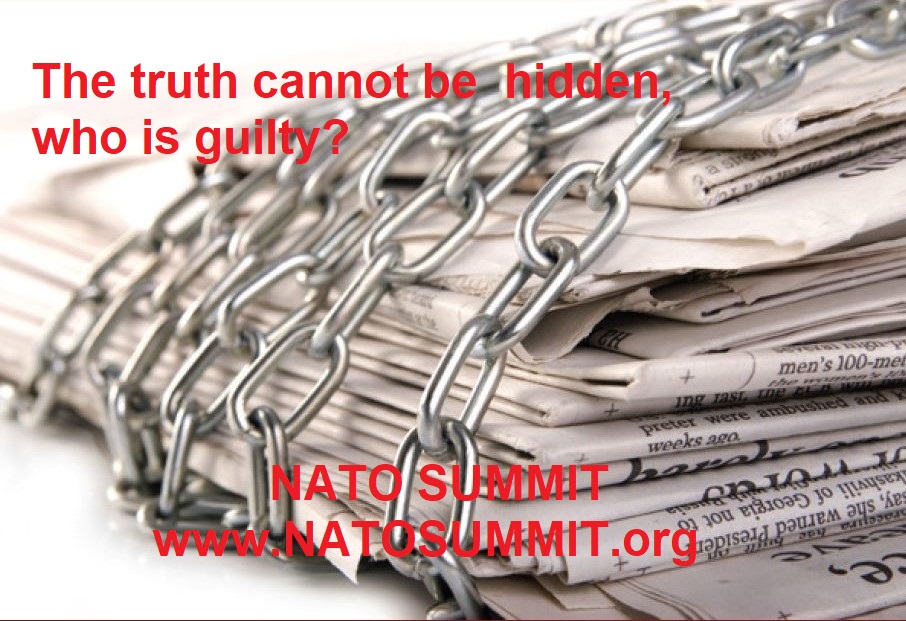
Press Freedom · NATO Ankara Summit 2026 · Türkiye Gazeteciler Cemiyeti
What Allison Hart Said — June 25, 2026
"NATO has long-standing media accreditation procedures for large-scale events. For summits and ministerial meetings taking place outside NATO HQ, in order to grant access to the venue, NATO consults the host country on their assessments regarding journalists from that country."
— Allison Hart, NATO Spokesperson, X post, June 25, 2026
"We are in contact with Turkish authorities regarding the accreditation process for the NATO Summit in Ankara. Media being able to cover important events is of great importance to NATO."
Read that statement once more. "NATO consults the host country on their assessments regarding journalists from that country." This is an extraordinary admission, delivered in the careful diplomatic language of an institution that understood exactly what it was saying — and chose to say it anyway, because the alternative was silence on a story that had already broken.
The story: multiple Turkish media organizations applied for accreditation to cover the 2026 NATO Summit in Ankara. Their applications were rejected. The question of who made that decision has now been answered by NATO's own spokesperson. The host country — in this case, the Turkish Presidency — was consulted on "assessments regarding journalists." Those assessments resulted in rejections.
The Presidency of Communications, which manages the Turkish government's media relations and summit communications, is the institutional actor with the mandate and the proximity to the decision. The informal shorthand used in Turkish media — "the Palace" — refers to the Beştepe Presidential Complex, which is also the summit venue. The institution that rejected journalists is the same institution that is hosting the summit.
"A government that can veto which journalists cover a NATO summit — using NATO's own accreditation process as the mechanism — has achieved something remarkable: it has turned the alliance's press infrastructure into an instrument of domestic media control."
The Mechanism Matters
The significance of Hart's statement lies not only in what it reveals about Ankara 2026, but in what it reveals about NATO's standard procedure. This is not an exception created for this summit. It is, in Hart's own words, a "long-standing" practice for summits held outside NATO Headquarters. Host nations have always been consulted on journalist accreditations for their territory.
At most previous summits, this consultation was a security formality — checking that accredited journalists were not known security threats. The mechanism was not designed to be a tool of political censorship. It was designed to facilitate access, not restrict it.
What Ankara 2026 appears to have demonstrated is that the mechanism can be used for both purposes simultaneously. Security screening and political screening are difficult to distinguish from the outside — both result in rejected accreditation applications, with no explanation provided to the applicant.
Hart acknowledged this tension directly in her follow-up statement: "Media being able to cover important events is of great importance to NATO." The statement reads as an acknowledgment that something has gone wrong — a values commitment asserted in the same breath as the procedural confirmation that made the problem visible.
What Was Lost in the Rejection
The journalists whose accreditations were rejected cannot be named here without verification this platform does not currently have. What can be stated is that independent Turkish media — outlets that have consistently operated under significant domestic pressure — were among those affected. This is not coincidental. The journalists most likely to ask difficult questions about the host government's record are the journalists most likely to find their applications reviewed unfavorably.
This is how media control works in practice in 2026: not through dramatic censorship orders, but through administrative decisions embedded in legitimate procedures. A journalist is not banned. A journalist's accreditation application is rejected, with no explanation, through a process that NATO describes as standard practice. The outcome — the journalist is not in the room — is identical to a ban. The mechanism is deniable.
The Values Contradiction
The 2026 NATO Summit will produce a communiqué that, based on every available indication, will include language affirming the alliance's commitment to democracy, rule of law, and freedom of the press. These are not aspirational statements — they are foundational commitments of the Washington Treaty framework.
A summit that affirms press freedom in its communiqué while permitting the host government to vet journalist accreditations is a summit that has allowed its values to be instrumentalized. The communiqué language and the accreditation practice cannot both be true in the same meaningful sense. One of them is operational. The other is rhetorical.
This platform has been documenting the gap between stated commitments and operational practice throughout the preparation for Ankara 2026. The digital preparedness gap. The 209 detentions. The 13-day demonstration ban. And now: a NATO accreditation process that the host government used to determine which journalists could bear witness to the summit organized in democracy's name.
The Journalists Named — A Record That Must Not Be Lost
The Turkish Journalists Association (TGC) issued a formal statement on June 25 naming the media organizations whose accreditation applications were rejected. The list is not a collection of fringe outlets. It is a cross-section of Turkey's independent media landscape:
Accreditation Rejected — Source: TGC Statement, June 25, 2026
→ Halk TV
→ Sözcü TV
→ Nefes
→ İlke TV
→ Cumhuriyet
→ ANKA Haber Ajansı
→ Medyascope
→ T24
→ Yetkin Report
These are not unknown blogs or fringe outlets. Several have decades of history. Several have faced sustained institutional pressure for years. All applied through legitimate channels. All were rejected — without explanation.
The TGC's statement named the mechanism explicitly: "The rejection of accreditation requests without explanation and the expectation that applicants not question these reasons is deeply concerning." It called on NATO to "abandon the embargo against independent media" and affirmed that the alliance had, through this decision, violated its own foundational principles of democracy, individual freedom, and rule of law.
The TGC statement also named what was at stake beyond journalism: "NATO has also blocked the public's right to receive news." This is the correct framing. When accredited journalists are replaced by approved journalists, the information that reaches the public is shaped by the approval process. The summit communiqué will be reported by journalists whose presence was sanctioned by the government whose record the communiqué will partly assess.
A Note on This Platform's Own Record
This platform's X account, @AnkaraSummit, was suspended on June 18 — by automated systems, without human review, for reasons not fully disclosed. The suspension occurred 19 days before the summit. We have documented this in detail and reported it to RSF and CPJ.
We do not know whether our suspension and the journalist accreditation rejections are connected. We do know that both are part of the same broader pattern: the narrowing of independent coverage of the 2026 NATO Summit through mechanisms that are individually deniable and collectively significant.
The summit opens in 12 days. The room will be full of accredited journalists — the ones the host country approved. The story of who was kept out of the room is part of the record that this platform will continue to document, from the digital address we registered when official institutions did not, through channels that remain open because we built them ourselves.
The truth does not wait for permission. Neither do we.
THE PEN IS MIGHTIER THAN THE SWORD.
Accreditation denied? Story blocked? Coverage restricted before July 7?
You are not alone. Send us your story — we will publish, amplify, and archive what the accreditation process tried to prevent.
✉ ankarasummit@gmail.com
Share this platform. Support independent coverage.