Encircle First, Assign Later: What Western Think Tanks Actually Want from Turkey at Ankara 2026
In the weeks before the Ankara Summit, four major Western think tanks published analyses of Türkiye's role in NATO. Read individually, each appears reasonable. Read together, they form a coherent scenario: assign Türkiye the alliance's most demanding, most exposed, and most costly operational responsibilities — while the question of what Türkiye receives in return remains carefully unaddressed.
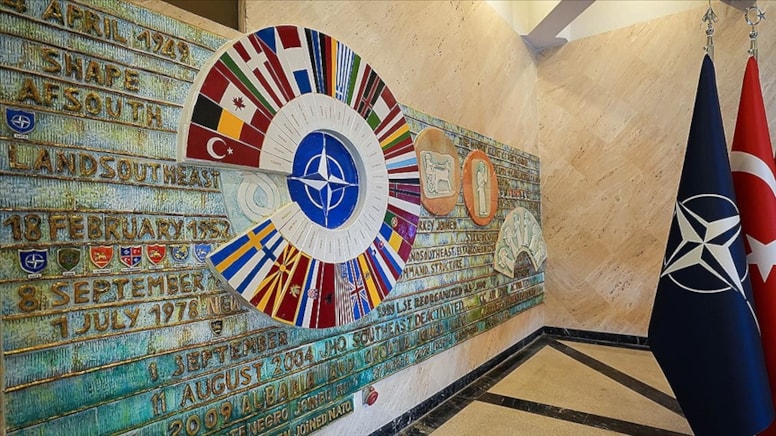
NATO Ankara Summit · July 7–8, 2026 · Beştepe Presidential Compound
The Analysts Shaping the Conversation
The think tank ecosystem that shapes Western policy debate does not operate in secret. Its analyses are published openly, presented at conferences, circulated to governments, and translated into diplomatic talking points. What makes the pre-Ankara output remarkable is not its secrecy but its coherence. Across four institutions with distinct mandates and audiences, a remarkably consistent picture of Türkiye's desired role has emerged.
The summary: lead the southern flank, command the Black Sea architecture, extend Operation Sea Guardian in the Mediterranean, prepare mine-clearing capacity in the Strait of Hormuz, manage irregular migration, counterbalance Russian influence in the Caucasus, and broker Middle East stability. All of this while spending 5% of GDP on defense. All of this as the host of the summit where these assignments will be formalized.
"The question being carefully avoided in every analysis is the same: this is a description of what Türkiye should do for the alliance. Where is the corresponding analysis of what the alliance should do for Türkiye?"
Atlantic Council: The Southern Assignment
The Atlantic Council's June 22 analysis — published the day before this article — argues that the Ankara Summit is "the perfect occasion" for NATO to deepen engagement with its southern neighborhood. The specific proposals: reinforce the Southern Neighborhood Security Dialogue at foreign ministers level, provide enhanced air-defense and counter-drone capabilities to southern flank allies, and extend Operation Sea Guardian in the Mediterranean.
The analysis acknowledges a significant complication: the Trump administration's 2026 National Defense Strategy states that "European allies' efforts and resources are best focused on Europe" — and that given U.S. focus on the Indo-Pacific, European allies should take primary responsibility for their own neighborhood. In practice, this means the southern flank operations that the Atlantic Council recommends for Ankara are operations that the United States is explicitly signaling it will not lead.
The gap between the ambition of the recommendation and the American willingness to resource it lands squarely on the shoulders of the alliance's most capable southern member: Türkiye.
IAI: The Italian-Turkish Strategic Convergence — With a Twist
The Istituto Affari Internazionali's framing is more nuanced — and more revealing for what it discloses about how Türkiye is being positioned in European strategic thinking. The IAI's May panel, co-hosted with the Turkish Embassy in Rome and — significantly — the Turkish Presidency of Communications, presented a framework of Italian-Turkish strategic convergence on the southern arc.
The Decode39 analysis that draws on IAI's work describes a potential "Rome-Turkey-Gulf axis" — a multilateral framework for managing U.S. demands for greater allied responsibility in the south. The framing is cooperative: Italy and Türkiye together, structuring a response to Washington's pressure that is "politically sustainable."
This is a more sophisticated positioning than simple burden-assignment. But it still leads to the same operational destination: Türkiye managing the southern arc — from the Strait of Hormuz to the Sahel, from the eastern Mediterranean to the Black Sea — within a multilateral framework that provides diplomatic cover but does not proportionally distribute the security burden.
Washington Institute: The Broker Expectation
The Washington Institute's framing adds a third layer. Türkiye's value, in this analysis, lies not only in its military capability and geographic position, but in its unique relationship architecture: good ties with the alliance's eastern and western flanks simultaneously, relationships with Russia, Ukraine, Iran, Gulf states, and North African governments that no other NATO member can match.
The expectation embedded in this framing: Türkiye will use these relationships to broker progress in Ankara — on Ukraine, on the Iran aftermath, on Middle East stabilization. Türkiye becomes the alliance's diplomatic utility player: the member called upon to use its bilateral relationships whenever the collective framework proves insufficient, while receiving no formal enhancement of its own security architecture in return.
West Point: The Paradox Nobody Is Resolving
The Modern War Institute's "Turkey Paradox" analysis is the most intellectually honest of the four. It acknowledges what the others carefully elide: Türkiye's strategic value to NATO is inseparable from Türkiye's strategic grievances against NATO.
The Jupiter missile removal after the Cuban Missile Crisis — when the U.S. traded away Turkish security assets in a bilateral deal with Moscow without consulting Ankara. The 1964 Johnson letter warning that NATO protection might not apply if Turkish action in Cyprus triggered Soviet retaliation. The decades of F-35 exclusion over the S-400 purchase, despite Türkiye's legitimate security rationale for the acquisition.
The paradox is this: the more valuable Türkiye is to the alliance, the more the alliance has historically felt entitled to treat Turkish security interests as negotiable variables in larger strategic calculations. Ankara 2026 is, in this reading, not a new dynamic but a recurring one: Türkiye's geography and capability create leverage; that leverage creates expectation; the expectation arrives without reciprocal commitment.
The Scenario: 32 Nations Secured, One Nation Assigned
Read the four analyses together and a scenario emerges. Türkiye hosts the summit. Türkiye is assigned southern flank leadership — the most geographically exposed, operationally demanding, and strategically complex zone in the alliance. Türkiye is expected to deploy mine-clearing capacity in Hormuz, extend Mediterranean operations, manage migration pressure from the south, lead the Black Sea architecture, and serve as diplomatic broker for the alliance's most intractable regional dossiers.
Meanwhile, 31 other members focus their resources on their own neighborhoods, meet their spending targets, and attend a summit in Ankara where the host has absorbed the operational assignments that the alliance's most powerful member has explicitly signaled it will not lead.
The question that no think tank analysis poses directly: Is collective security genuinely collective if one member — by virtue of geography and capability — consistently bears a disproportionate share of its most exposed operational responsibilities? Does the alliance's Article 5 guarantee mean the same thing to a member that defends everyone's southeastern flank as it does to a member whose primary security environment is managed by its neighbors?
What a Genuine Reciprocity Would Look Like
This analysis does not argue that Türkiye should withdraw from its alliance responsibilities. It argues that genuine collective security requires genuine reciprocity — and that the pre-summit think tank discourse has been conspicuously better at articulating what Türkiye should contribute than at articulating what the alliance should provide in return.
Genuine reciprocity at Ankara would look like: a formal NATO commitment to southern flank air defense infrastructure that matches the eastern flank investments made since 2022; a resolution of the F-35 exclusion or a comparable capability offset; a clear framework for how Türkiye's bilateral relationships with Russia, Iran, and Gulf states are valued rather than merely utilized; and explicit language in the summit communiqué acknowledging southern flank burden-sharing as a collective alliance responsibility, not a Turkish bilateral obligation.
Whether any of this appears in the Ankara communiqué is the real measure of whether the alliance's collective security framework is genuinely collective — or whether the summit's host has once again been asked to secure the room while the guests negotiate among themselves.